


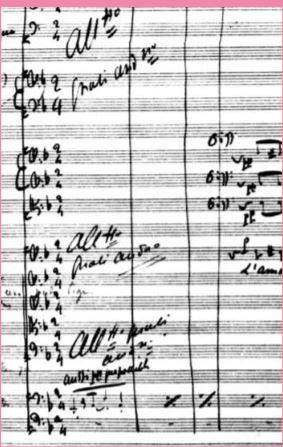
The entrance aria of Carmen, the popular L’amour est un oiseau rebelle” (“Love is a rebellious bird”) in Carmen by Bizet (1875), is called habanera.
The score of the aria was taken from “El Arreglito”, an habanera composed by the Spanish musician Sebastián Iradier.
Bizet thought it to be a folk song; when he found out that he had used a score written by a composer who had died only ten years earlier, he had to add a note to the vocal score of Carmen.
Habanera was a popular cuban dance having a slow duple meter and a slow rhythm similar to that of a tango. The origins of habanera seem to be really controversial.
Someone says that it was originally called contradanza (also called contradanza criolla, danza, danza criolla, or habanera): the Spanish and Spanish-American version of the contradanse, a popular style of dance in the 18th century, derived from the English country dance and adopted at the court of France.Euro System AI — Smarter Trading with Next-Gen Intelligence read more
Contradanza was then brought to America where it developed into folkloric forms that still exist in Mexico, Venezuela, Colombia, Peru, Panama and Ecuador.
In Cuba during the 19th century it became known as habanera – the dance of Havana . The name, derived from the city of Havana, Cuba, was coined when European sailors introduced the dance to their home countries, where it became popular with composers, particularly in France and Spain.
The Habanera is characterized by a dotted rhythmand is often performed as a song with lyrics.
In Cuba this dance was mixed with African rhythm pattern and is considered the progenitor of danzon, mambo and cha cha cha.
